2026-03-12
12This year's government work report calls for opening up the "last mile" of agricultural technology extension.
Deep in the mountains of Gannan, Jiangxi, a group of post-95 young people with an average age under 29 have rooted themselves in the Camellia Mushroom Science and Technology Backyard, "moving" premium northern mushrooms south for cultivation. In three years they cracked the problem of "acclimatization", moving from "depending on the weather" to "digital mushroom farming", turning the little mushroom into a "golden umbrella" of rural revitalization.
A group of post-95 "mushroom masters"
Rooted deep in the mountains, researching "northern mushrooms grown in the south"
Xiang Junjie, senior smart agriculture manager of the Ganxian Camellia Mushroom Science and Technology Backyard, jokingly calls him-self the "mushroom master" of the mountains. He leads an equally young research team deep into the Gannan mountains, focusing on the "northern mushrooms grown south" project.
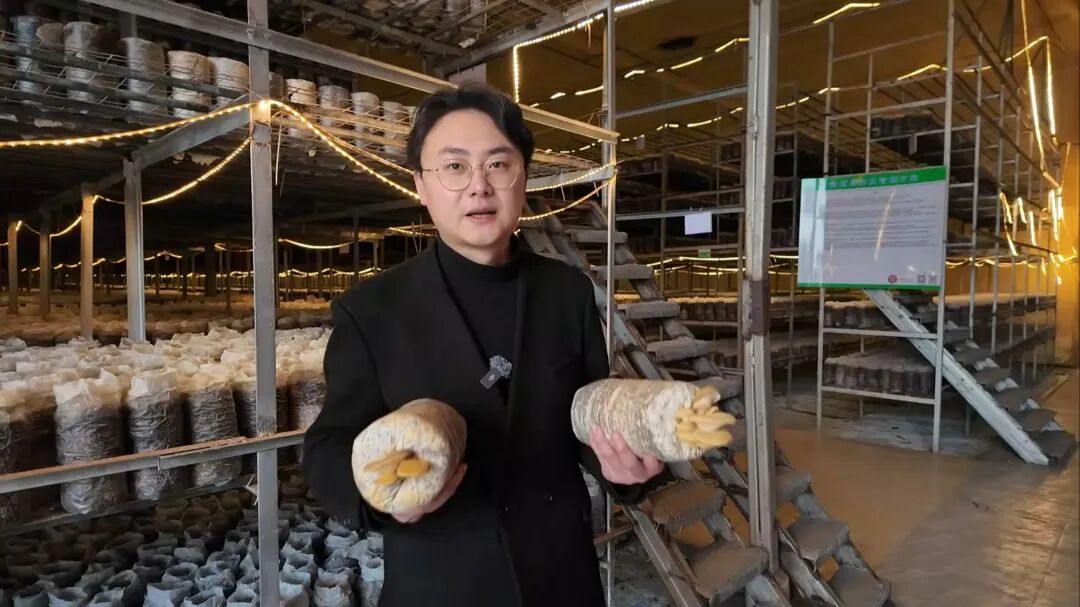
Xiang Junjie, a post-95 "mushroom master" deep in the mountains
Their goal is clear: introduce high-quality northern mushrooms - golden oyster mushroom, hazel mushroom, bear's head mushroom, mulberry yellow fungus and more - into the climatically very different southern mountains, fill a market gap, let southern consumers enjoy fresh northern delicacies at their doorstep, and turn these "guest mushrooms" into local "wealth mushrooms".
Most of this young team came from Jiangxi Agricultural University, Jiangxi College of Applied Technology and other institutions. They say that after finishing their studies they ran into the deep mountains to write their research papers on the land of the motherland, keep their technical results in the mountains, and let technology truly reach the fields.
After 900+ days of research,
the mushroom survival rate rose from 30% to 85%
Northern mushrooms like cool conditions and tolerate low temperatures, while Gannan is warmer with big day-night temperature swings. In the first trials the mushroom bags either failed to fruit or were infected by competing fungi, with a survival rate below 30%.
Facing weak, deformed mushrooms, these young people did not back down. They moved the laboratory into the greenhouse and lived on the base, working in a "observe by day, analyze data at night" mode. Every early morning they entered the sheds to record temperature, humidity and negative oxygen ions hour by hour, comparing north-south climate differences and gradually adjusting the substrate formula and growing environment.
They used local materials - camellia seed cake, sawdust and rice husks - to prepare the culture medium, cutting costs and improving quality. In summer they used green prevention plus microbial technology to reduce contamination; in winter, smart temperature control simulated the northern low-temperature environment.Over nearly three years and more than 900 days, the survival rate of northern mushrooms in Gannan rose from under 30% to over 85% - this young team cracked the industry problem of "acclimatization".
Hands-on teaching of planting and harvesting
They helped over 10,000 farmer households raise their incomes
A technology breakthrough is not the end goal; turning technology into productivity and helping farmers make money is the true aspiration of these young "mushroom masters".
With the technical support of the Science and Technology Backyard, the locality built a full industry chain of "strain R&D - standardized production - cold-chain distribution". The northern mushrooms they cultivated passed Shenzhen's "Zhenpin" and Jiangxi's "Ganpo Genuine" certifications as well as green and organic certification, successfully entering the Guangdong-Hong Kong-Macao Greater Bay Area market.
Together with companies, the team also built forest mushroom bases in Jinggangshan, Shicheng and Jishui, developing forest-mushroom and forest-medicine compound economies, directly helping more than 10,000 farmer households increase their incomes.
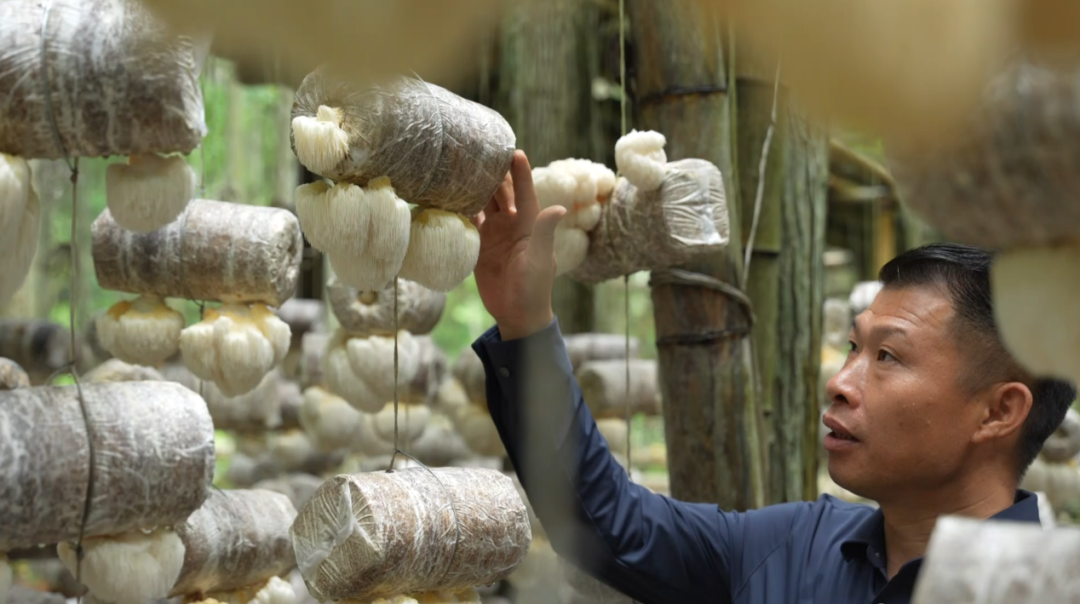
They hide nothing and set no thresholds, training local mushroom farmers for free, teaching planting, harvesting and baking hands-on, and building a "company + state-owned forest farm + cooperative + farmer" linkage mechanism.The southern market, which once could only get dried products, can now buy fresh northern delicacies anytime.Ganxian mushroom farmer Liu Zhenlin said with emotion:"My income has doubled. I never thought northern mushrooms could grow here!"
An NPC deputy on Science and Technology Backyards:
Working with companies and farmers to solve frontline problems
Across the country there are many more such Science and Technology Backyards, an important link in agricultural technology extension.
Zhang Fusuo, NPC deputy, academician of the Chinese Academy of Engineering and founder of the Science and Technology Backyard model, believes the backyard is rooted on the production frontline, working with farmers and companies on technological innovation, social services and talent training. Its original aspiration is to solve the bottleneck technical problems of industry development on the front line, using innovation to make the industry better - and to verify that the innovation is right.
This year's government work report calls for opening up the "last mile" of agricultural technology extension.In Zhang's view, the key is cooperating well with companies: "When you arrive in a place, you must analyze what its representative industry is. If there is no cooperative or company to organize farmers, you must find a way to organize them, so farmers gain a voice in the market, get better prices and increase their incomes."

"A Science and Technology Backyard is not ordinary research, not simply writing plans and papers. We are on the production frontline all year round, helping farmers solve big and small problems at zero distance, making the industry chain smoother."Zhang suggested that, going forward, the backyard model should combine the industry chain, talent chain and innovation chain, and coordinate education, science and technology and talent to cultivate the high-level, versatile talent rural revitalization needs, further empowering rural revitalization.