2026-03-10
10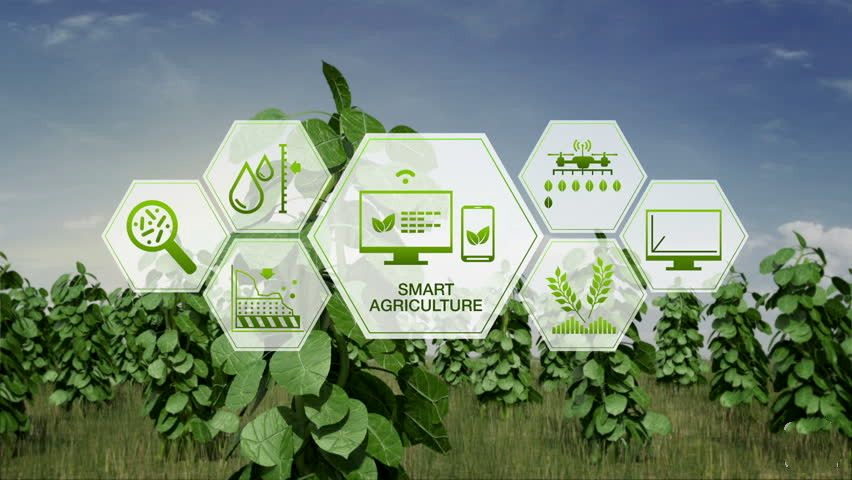
Digital agriculture is the core of agricultural modernization and an important part of digital village development and rural revitalization. "Digitalization" is the most powerful expression of technology empowering agriculture.So what exactly is digital agriculture? Can it grow from a local "potted landscape" into a large-scale "scenery" of widespread adoption? And how can research results be translated into stronger competitiveness and higher productivity?
"Digital agriculture" emerged as the digital economy grew rapidly. It is an emerging form of agricultural development that takes digital information as a new factor of agricultural production and uses digital information technology to visually represent, digitally design and information-manage agricultural objects, environments and the entire process. It is one of the typical applications in the digital economy that reforms and upgrades traditional industries through digital restructuring. As early as 2020, the Ministry of Agriculture and Rural Affairs issued the "Digital Agriculture and Rural Development Plan (2019-2025)", further clarifying that digital agriculture is the future direction of agriculture.
The concept of "digital agriculture" was first formally proposed in 1997 by academicians of the US National Academy of Sciences and the National Academy of Engineering.
What is digital agriculture?
Digital agriculture is modern agriculture that treats information as a factor of production and uses modern information technology to visually represent, digitally design and information-manage agricultural objects, environments and the whole process. It effectively integrates information technology with every link of agriculture, and is of great significance for transforming traditional agriculture and changing the way agriculture produces.
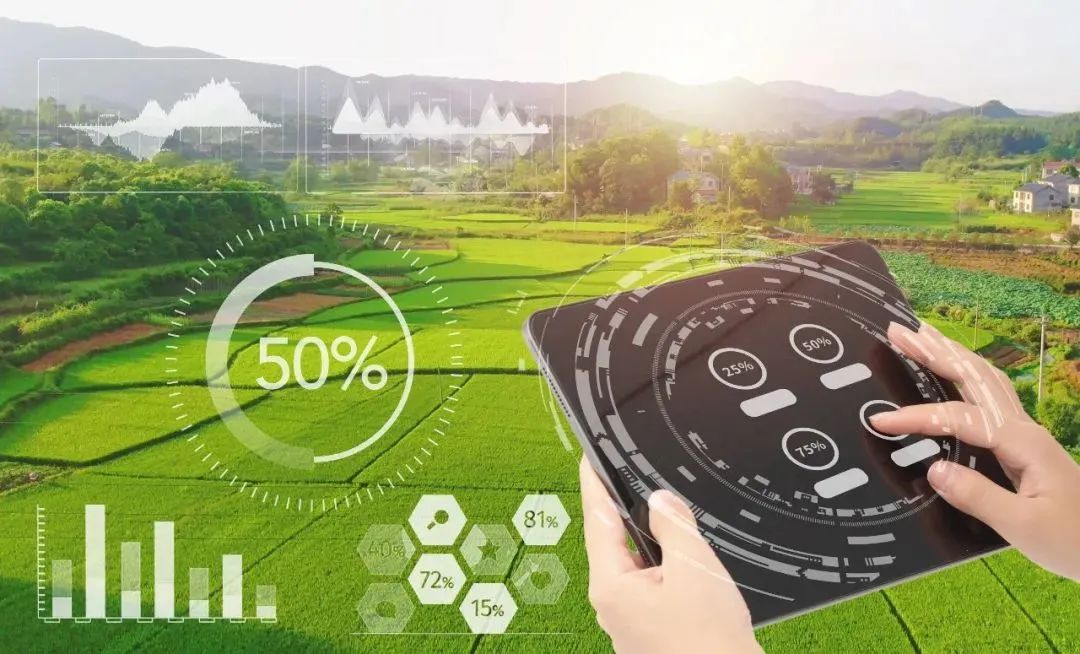
The four components of digital agriculture
# 01Agricultural Internet of Things
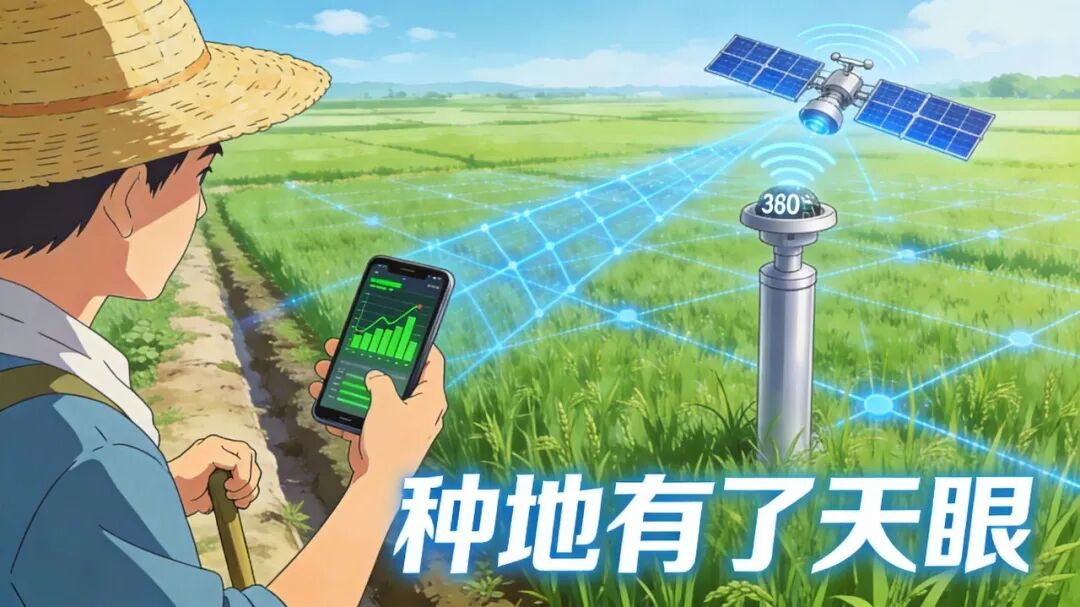
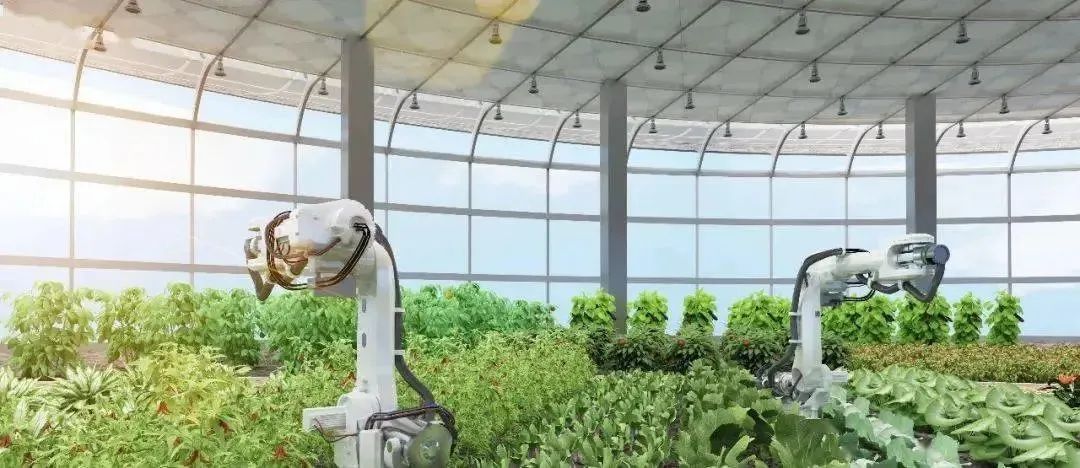
In essence, the agricultural IoT is a numerical control system. Within a specific closed system, things are connected through probes, sensors, cameras and other devices. It performs automated regulation and operation according to established parameters and models. Because it requires investment in hardware and networking, the outlay is relatively large; it is mainly used to manage and operate facility-based agricultural production, as well as the processing, storage and logistics of agricultural products.
# 02Agricultural big data
Agricultural big data is the counterpart concept to the agricultural IoT. It is a data system that collects, verifies and labels data in an open system and builds databases, combining and optimizing multi-dimensional and massive data through parameters, models and algorithms to provide a basis for production operations and business decisions, and to achieve partial automated control. Because it operates in a fully open system, it is mainly used for open-field agricultural production and for operations across the entire agricultural industry chain.
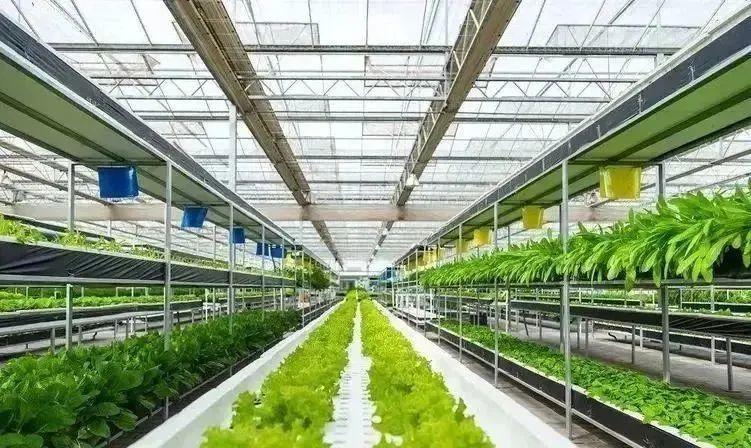
# 03Precision agriculture
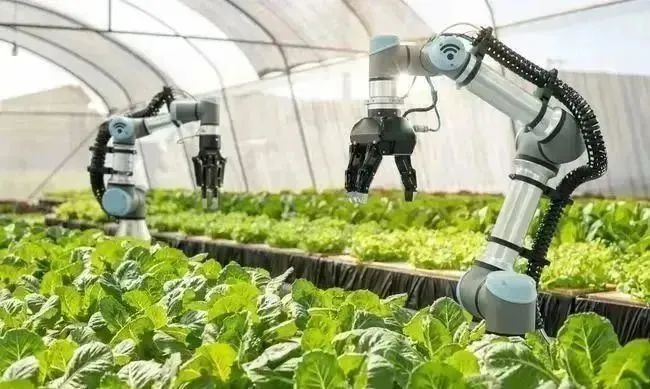
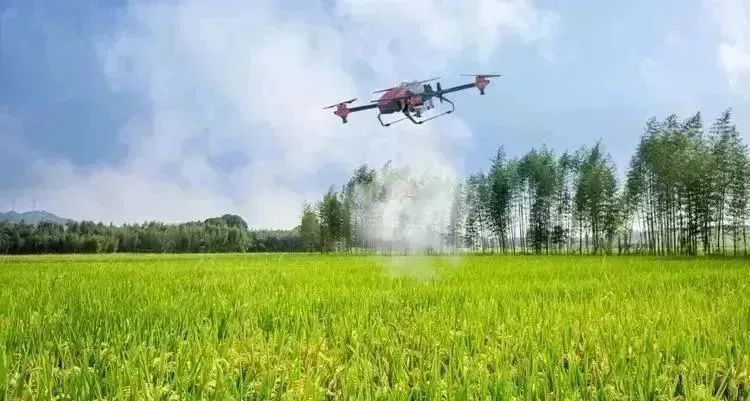
Precision agriculture is an execution and operating system built on agricultural machinery hardware. Based on single-machine hardware and equipped with detection devices and intelligent control software, it achieves precise operation, variable-rate control (variable seeding, variable fertilization, variable spraying, etc.), unmanned driving, and optimal adaptation to the working environment and scenario. Precision agriculture emphasizes precise and intelligent control of (individual) equipment and facilities - it is hardware plus software.
# 04
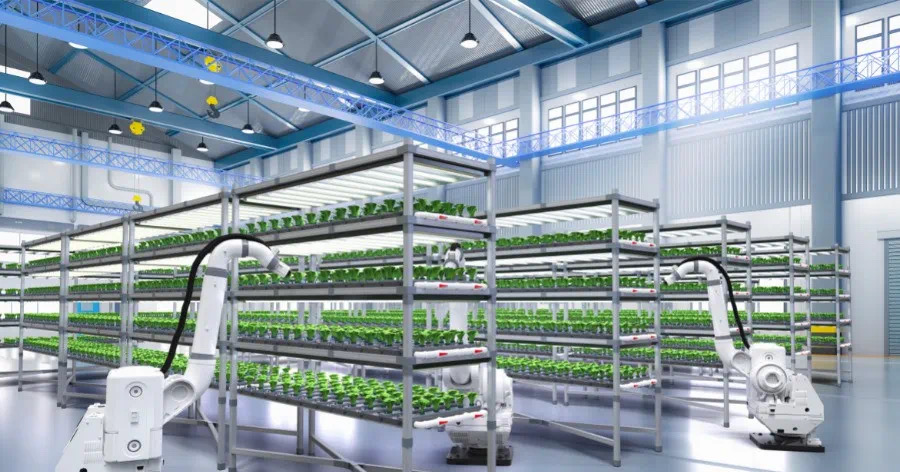
In 2016, the sudden arrival of Google DeepMind's Alpha Go raised the decision-making level of artificial intelligence (AI) to unprecedented heights, making people realize that AI development was accelerating with broad prospects - and giving a strong shot in the arm to the development of digital agriculture.
Because digital agriculture is still at an early stage and there remains much ambiguity about its core components and how they are understood, concepts are often misused or conflated.
The future of digital agriculture is highly attractive, but agriculture involves a vast range of categories and varieties, with long and complex production processes, many uncontrollable factors and many variables. It will therefore take time for digital agriculture to move from single-point breakthroughs to comprehensive progress and application.
Three characteristics of digital agriculture
# 01Highly specialized, large-scale and enterprise-based production
Specialization in US agriculture is multi-layered, mainly expressed as regional specialization, farm specialization and production-process specialization. The US mainland is divided into several major crop belts, each best suited to one crop - the famous "Corn Belt", "Dairy Belt" and so on. The vast majority of farms produce only one crop on a large scale, and some produce only one variety of one crop, or only do breeding for one crop. This adaptation to local conditions and division of specialization combines specialization with scale well, forming a modern industrial model of specialized production, intensive management and enterprise-based management.
# 02A well-developed agricultural production system
The United States has built a developed agricultural production system in which the pre-production, in-production and post-production stages are closely linked, covering the production and supply of agricultural inputs as well as post-harvest storage, transport, processing and marketing. They have a clear division of labor and efficient collaboration, and under the protection of the relevant agricultural legal framework, agricultural production proceeds in an orderly and efficient way.
# 03A "three-in-one" system of agricultural education, research and extension
US agriculture is privately run, but governments at all levels actively support agricultural science and technology and have built a distinctive "three-in-one" system of agricultural education, research and extension. Agricultural colleges carry out all three functions at once, closely combining teaching, research and extension and providing powerful technological momentum for agricultural development.
The state of digital agriculture in China
In recent years, China's digital agriculture technology has developed rapidly: a batch of key digital agriculture technologies has been broken through, a number of practical digital agriculture products have been developed, and networked digital agriculture platforms have been established. Examples include the "Apple Industry Big Data Center" piloted by the Ministry of Agriculture and Rural Affairs in Shaanxi Province and the smart agriculture cloud platform that Top Cloud Agriculture built for the Zhejiang provincial government - both cases of big data application in digital agriculture.
At present, Chinese companies have achieved important stage results in agricultural digital information standard systems, agricultural information collection technology, large-scale agricultural spatial information databases, crop growth models, digital virtual design of animals and plants, remote diagnosis of agricultural problems, agricultural expert systems and decision support systems, multimedia information systems for distance agricultural education, embedded handheld agricultural information products, intelligent greenhouse environment control systems, digital agricultural macro-monitoring systems and agricultural bioinformatics. Through application demonstrations in different types of regions, a preliminary digital agriculture technology framework has taken shape in China
But China's digital agriculture is still at a relatively early stage, and large hardware investments have not really solved agriculture's fundamental problems. In many places, digital agriculture projects show problems such as "more output but not more income", a disconnect between the three stages of "planting, production and sales", or digital concepts detached from actual production conditions. Specifically:
# 01Hardware over software
Both governments and farmers tend to confuse digital agriculture with agricultural mechanization. The fundamental difference is that mechanization uses machines to replace human labor, while digital agriculture uses data to drive machines toward automated operation and intelligent adjustment. IoT without data and software to drive it is still just a tool - not essentially different from mechanical agriculture. Only by opening up the software platform do we hold the key to big data, smart agriculture and the digital economy.
# 02Data without intelligence
Data is the foundational resource of digital agriculture, and in recent years governments and companies have invested heavily in data collection. Yet lacking a clear business direction and the necessary data operation skills, work on data quality control, analysis and processing, and modeling application lags behind. Data acquisition and application form a two-way interactive process: only by constantly trying to generate business value from data can valuable data collection channels be built.
# 03A weak digital economy
Most of China's digital agriculture applications remain in the production stage - strictly speaking, the early stage of Agriculture 3.0 - while informatization and economic development in other links of the industry chain remain low. Although the Ministry of Agriculture has proposed a "whole industry chain" path for agricultural big data, the potential of other links has not been fully unleashed, and agricultural e-commerce has not yet begun to attempt a data-driven approach. The agricultural digital economy differs from other key factors of digital agriculture: it is in fact driven in reverse by market capital. The agricultural e-commerce model uses digital means to drive the market economy in market promotion and operations, production
# 04Weak productization capability
Agricultural data service companies have emerged one after another in recent years, but their ability to serve agricultural producers is generally insufficient and product marketization is difficult. The service capability of data products depends heavily on data quality; as high-value data continues to accumulate, product usefulness is expected to improve. Only by continuously building viable data products can the huge agricultural digitalization market be unlocked.
Development trends of digital agriculture
Agriculture 4.0, characterized by "digitalization", is unquestionably the future. Digital agriculture will bring higher industrial efficiency, fairer value distribution and more sustainable development. We believe China's digital agriculture will show six major trends:
# 01Customized data supply
Data resources are the cornerstone of digital agriculture, and China currently faces the problem of high data collection costs. As data thinking takes root, the organizational cost of data collection will fall sharply; as the agricultural IoT is upgraded, public data continues to open up and practitioners' informatization level rises, the explicit cost of data collection will keep falling. In the future every agricultural industry unit will have a customized data supply system. Moreover, the static resources in data warehouses will keep flowing into the industry chain as their owners' digital capabilities improve, creating value through exchange, fusion or regeneration and realizing business
# 02Localized data models
Discovering the value of data is the source of momentum for digital agriculture. Israel will sell us hardware but will never open its backend systems, because the truly core technology is the model that realizes the value of data. Today, as technological competition among major powers intensifies, barriers to importing scientific achievements keep rising; and because domestic and foreign agricultural conditions differ greatly, we cannot simply copy foreign models. On the other hand, China continues to encourage the industrial transformation of research results, and cross-border cooperation between industry and academia and between agriculture and data science is deepening - so independent development of core industrial data models is the trend.
# 03Intelligent agricultural machinery
Only "data-driven" separates mechanization from intelligentization. The Made in China 2025 strategy clearly makes "smart manufacturing" its main direction; following the market trend, established manufacturers such as Haier and Goldwind have actively pursued digital transformation in search of new growth. Agricultural machinery makers will also increasingly use data to empower their machines, adapting to the needs of digital farm scenarios and transforming from manufacturers into service providers.
# 04Virtualization of the industry chain
As digitalization improves across every link of the agricultural industry chain, and as digital machine intelligence and business intelligence enter production and management, the industry chain will keep moving online and gradually complete a digital mapping of reality in the network world. Virtualization of the industry chain will further help eliminate information asymmetry, improve industrial efficiency and discover new growth.
# 05Inclusive supply chain finance
Supply chain finance has grown rapidly in recent years; it is estimated that by 2020 China's supply chain finance market could reach 14.98 trillion yuan. Supply chain finance is an important part of industry optimization: it promotes the healthy development of industry, especially SMEs, by optimizing capital flows. Through IoT, internet and AI and other emerging technologies, digital agriculture will effectively help SMEs integrate organically into industry networks, providing a solid industrial foundation for inclusive supply chain finance; at the same time, the transparency of industry information and the traceability of entity credit brought by the virtualization of agriculture will also allow the quantification of financial risks
# 06Enhanced data security
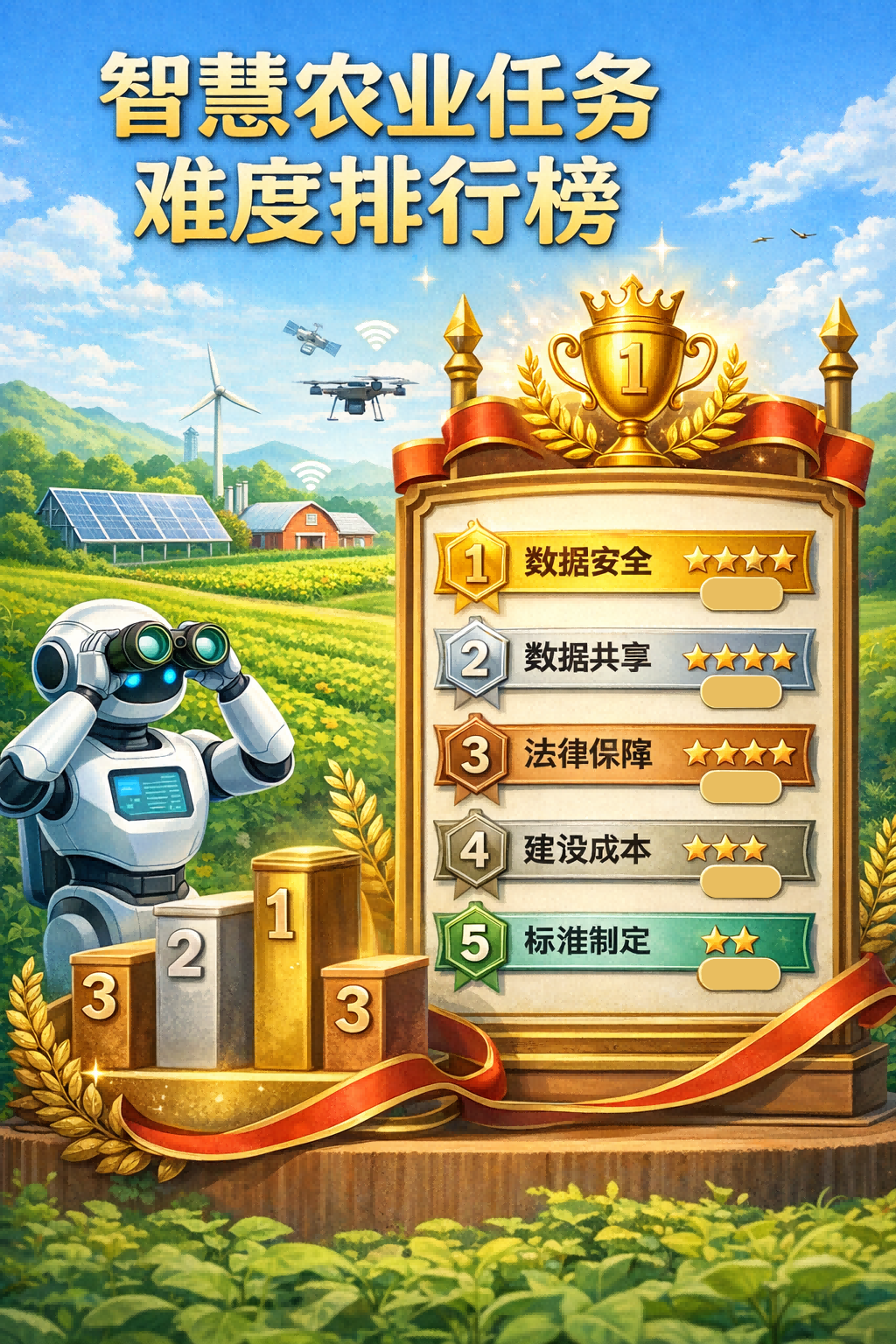
Both farmland data and enterprise operating data are key information reflecting the production and business status of practitioners. While data brings momentum to the industry, it also carries the risk of misuse. Data security is therefore a basic guarantee for industrial digitalization. Demand for the security of information systems that store and apply data will keep growing, and data ownership issues will be properly resolved as laws improve, removing the worries that hold back industrial digitalization.