2026-03-10
10(Feb 3) - the "Opinions of the CPC Central Committee and the State Council on Anchoring Agricultural and Rural Modernization and Solidly Advancing Comprehensive Rural Revitalization" was released to the public. It is the 14th consecutive No. 1 central document guiding work on agriculture, rural areas and farmers since the 18th National Congress of the CPC, and another No. 1 document themed on advancing comprehensive rural revitalization.
What new prospects for agriculture, rural areas and farmers does this year's No. 1 central document contain? Here is the experts' reading.
Keyword: Anchoring
Tu Shengwei, researcher at the Academy of Macroeconomic Research of the National Development and Reform Commission, notes that the defining feature of this year's No. 1 central document is that it anchors the goal of agricultural and rural modernization and plans the year's work by working backwards from that target.The further modernization advances, the more urgently we must consolidate the agricultural foundation and close the gaps in agricultural and rural modernization. Therefore, this year's document sets out an overall plan for work on agriculture, rural areas and farmers around the development goals of building agriculture into a modern large-scale industry, ensuring basic modern living conditions in rural areas, and enabling farmers to live prosperous and better lives.
Keyword: Improvement
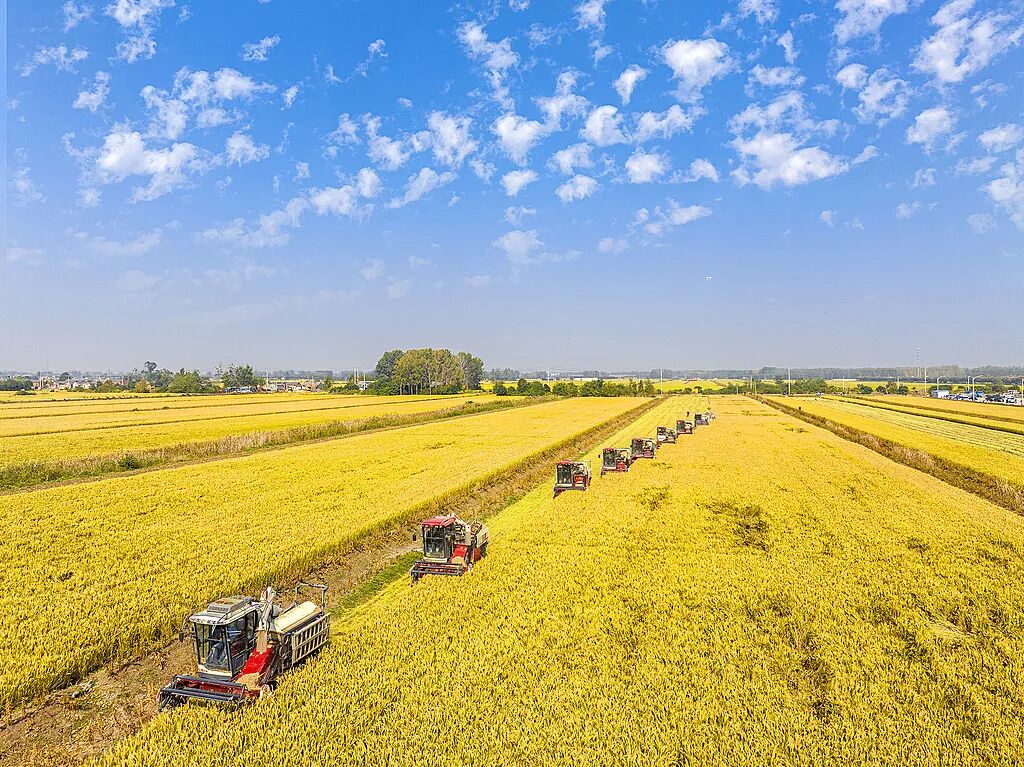
In 2025, China's grain output stayed above 1.4 trillion jin for the second consecutive year.This year's No. 1 central document stresses raising comprehensive agricultural production capacity as well as quality and efficiency, clearly calls for stronger implementation of a new round of action to raise grain production capacity by 100 billion jin, and emphasizes pushing forward on both improved grain varieties and improved grain quality.
Zhao Changbao, director of the Rural Economy Research Center of the Ministry of Agriculture and Rural Affairs, explains:
First, securing quantity: continuously raise comprehensive agricultural production capacity, keep grain acreage stable, treat raising per-unit yields of grain and oil crops over large areas as the key measure, and hold firmly the initiative in food security;
second, improving quality: accelerate the transformation of the agricultural development model so that the variety and quality of agricultural supply better match consumer demand;
third, increasing returns: do everything possible to promote steady growth in farmers' incomes, and make the most of the "grain-to-food", "livestock-to-meat" and "farm-to-factory" value chains.
Keyword: Normalized targeted assistance
After victory in the battle against poverty, the Party Central Committee set a five-year transition period to help impoverished areas and people get on their feet and go further. By the end of 2025, all tasks and targets of the five-year transition period were successfully completed. This year is the first year of normalized assistance after the transition period ended.The No. 1 central document puts forward the concept of "normalized targeted assistance" for the first time.
Lin Wanlong, vice president of China Agricultural University, explains that this year's No. 1 central document differs most in three words - normalized.
Before 2020 it was the all-out poverty eradication period; from 2021 to 2025 it was the transition period; starting in 2026, normalized assistance is clearly proposed, and the core is overall stability with minor adjustments. Generally speaking, previous measures proved effective and should be kept stable. Of course, some policies need further optimization, hence "minor adjustments."
Zhao Changbao, director of the Rural Economy Research Center of the Ministry of Agriculture and Rural Affairs, explains:
Provide classified and targeted assistance: improve safety-net guarantees for those unable to work; for those able to work, focus on coordinated development-oriented assistance.
Make development-oriented assistance the top priority, improve incentive mechanisms such as rewards instead of subsidies and subsidies tied to results, and encourage prosperity through hard work.
Optimize industry assistance, accelerate the cultivation of a batch of county-level leading industries with distinctive advantages, complete chains and rich business formats, and promote full-chain development of assistance industries to benefit and enrich farmers.
Make full use of channels such as east-west labor cooperation, employment workshops, rural public-interest jobs and rural artisan training to promote stable employment and income growth, and improve the quality and effectiveness of employment assistance.
Keyword: Stable income growth
This year's No. 1 central document gives a very prominent place to increasing farmers' incomes, stressing active promotion of steady income growth for farmers.
In 2025, the per capita disposable income of China's rural residents reached 24,456 yuan, a real increase of 6% over the previous year. Experts note that farmers' incomes have grown steadily in recent years, but the challenges to sustained and stable income growth are mounting. Support for raising farmers' incomes should be strengthened along the lines of "stabilizing returns, extending chains, increasing employment and expanding consumption."
The No. 1 central document focuses on promoting stable income growth for farmers from two angles: operating income and wage income.
Zhao Changbao, director of the Rural Economy Research Center of the Ministry of Agriculture and Rural Affairs, explains:
Strengthen policy support and coordination on prices, subsidies and insurance, and improve the mechanism guaranteeing grain growers' returns.
Implement the inter-provincial horizontal benefit compensation policy between grain producing and marketing regions, and support major grain-producing areas in replenishing their finances and developing the grain industry.
Tu Shengwei, researcher at the Academy of Macroeconomic Research of the NDRC, explains:
Keyword: Adapting to local conditions
Building beautiful and harmonious countryside that is pleasant to live and work in is an important task in advancing comprehensive rural revitalization.This year's No. 1 central document proposes advancing the building of such countryside in ways adapted to local conditions.Why emphasize "adapting to local conditions"? And how should it be done?
Zhao Changbao, director of the Rural Economy Research Center of the Ministry of Agriculture and Rural Affairs, explains:
Rural construction is for farmers, and must adhere to the people-centered development philosophy. China has a vast territory, and economic and social development levels and resource endowments vary greatly from place to place, so rural construction must explore differentiated paths, give full play to each locality's own advantages, respect nature, protect the ecology, retain local character and pass on farming culture. The No. 1 central document stresses improving the implementation mechanism for rural construction in line with local conditions, which sets higher requirements for the work.
Tu Shengwei, researcher at the Academy of Macroeconomic Research of the NDRC, explains: