2026-04-13
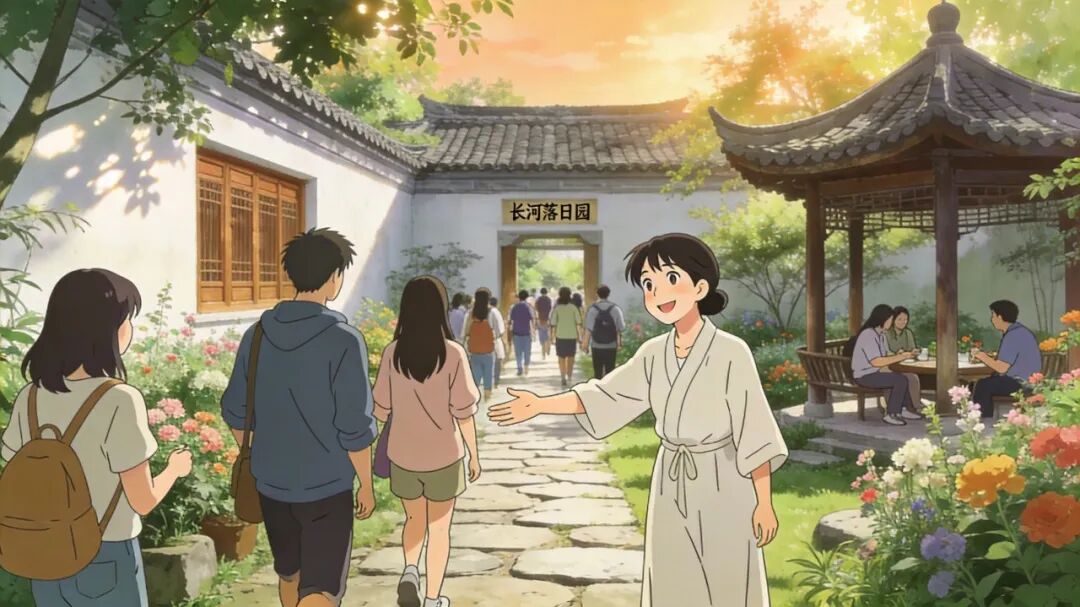
13I am Wang Chuan and have worked in agriculture for about ten years. A few days ago during field research in Chongzhou, Chengdu, I was stunned by a courtyard. One in Liaoja Town called "Long River Sunset Garden" opened in October 2024; its single-day visitor record exceeded 4,000 visits, with annual revenue over 20 million yuan. Want to book a spot on the weekend? Even booking a week ahead may not get you one.
Why? All thanks to that tiny plot in front of and behind the house.
The 2026 No. 1 central document clearly proposes "developing 'small and beautiful' cultural tourism business formats", and the courtyard economy is the most down-to-earth entry into this track. As Sichuan Daily's analysis points out, the policy direction is clear - rural cultural tourism needs new possibilities, but the reality is that many farm restaurants, guesthouses and village cafes open and then close in batches. Chongzhou's new mechanism offers a path.
Chongzhou's "Long River Sunset Garden" is not an isolated case. The project in Liaoja Town, run by manager Zhang Yingjie, has been booming since opening, providing 220 jobs for villagers, and instantly becoming a "phenomenal hit" of rural tourism on Chengdu's outskirts.
Deep in Liuliba, Wenjingjiang Town, three "Beipiao" who left the big city turned a guesthouse and woodland into the "Guiyu Fangu" nature living community. With one mountain forest and a few courtyards, they show the most authentic and expansive possibilities of the "small courtyard economy".
According to an official of Chongzhou's culture and tourism bureau, the locality has guided the cultivation of 36 distinctive courtyards, which have attracted a cumulative 1.45 million visitor trips since the start of this year's flower season. These courtyards cover camping, study tours, intangible-heritage workshops, village cafes, wellness retreats and other formats - far beyond the scope of a single guesthouse.
Insight: the courtyard economy is not simply "opening a guesthouse", but "many possibilities growing out of a courtyard" - tea rooms, workshops, study tours, livestreaming. With creativity, even a tiny plot can become a treasure bowl.
Model 1: Cultural tourism - "courtyard + guesthouse + livestreaming"
In Yesanguan Town, Badong County, Hubei, at the national Grade-C "Mengyuan Guesthouse", owner Yang Rongqun has pioneered a new path of "guesthouses selling farm products to help farmers". In the off-season he livestreams mountain life in the early morning and sells local specialties such as cured meat and honey in the evening. The town now has 276 guesthouses, which received nearly 1.5 million visitor trips in 2025, with operating revenue of 194 million yuan, and households in the demonstration area saw average income growth of over 15,000 yuan。
Model 2: Farming and raising - "courtyard + free-range chickens + local specialties"
In Jiulaoying Village, Hua County, Henan, the courtyard economy is used as a breakthrough for targeted assistance. The village committee provides free chicks to struggling households, organizes a technical team for door-to-door guidance, and has come up with practical tricks such as "using geese to keep weasels away" and "roosters guarding the chicks". More important is the model innovation - "assets belong to the collective, products belong to the individual": the chicks are collective assets raised by the households, the eggs are entirely at the farmers' disposal, and the village committee guarantees purchase. Every bit of hard work translates into real returns.
Model 3: Bonsai - "courtyard + bonsai + cultural tourism"
In Jiayi Town, Yanshan County, Yunnan, farmers were guided to use the space around their houses to grow bonsai, gradually forming an industrial cluster centered on the Dajiayi and Xiaoshiqiao communities. The town now has over 80 bonsai growers with more than 5,000 pots. In 2024, the town's bonsai transactions exceeded 10 million yuan。
Model 4: Sharing - "courtyard + vegetable garden + experience"
In Sihenan Community, Mengjin District, Luoyang, Henan, 16 mu of abandoned land was turned into the "Chanshuiwan Shared Vegetable Garden". Plots of just over 100 square meters are opened to the public for "adoption" at about 30 yuan per square meter per year. A combined model of self-cultivation and full trusteeship solves the problem that city residents "have no time, or don't know how, to farm". Once all 16 mu were rented out, annual revenue exceeded 200,000 yuan, with per-mu income over 10,000 yuan.
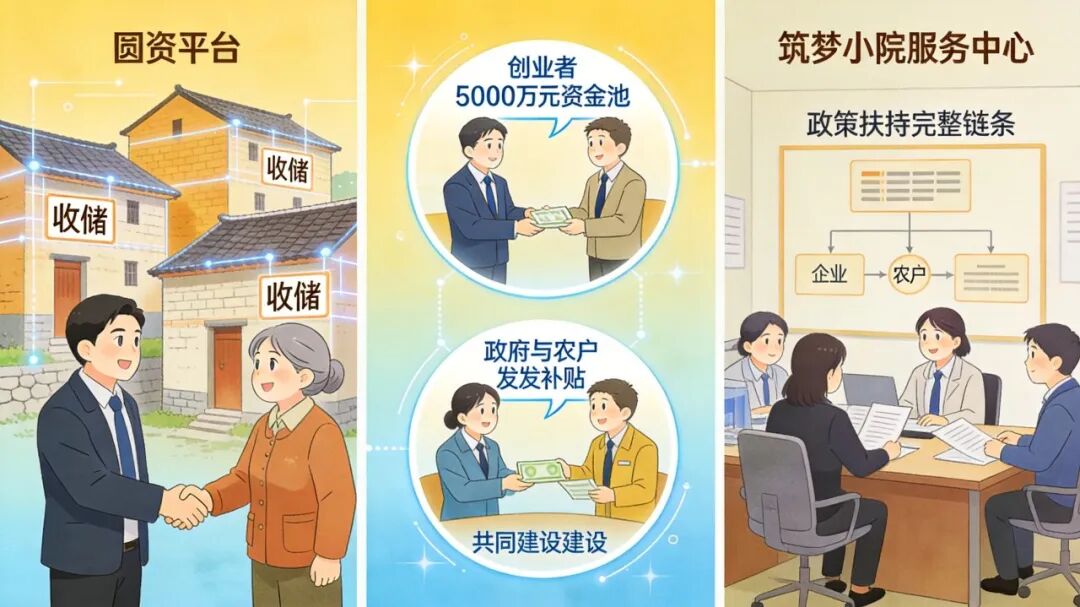
Why are Chongzhou's courtyards taking off? Because they removed three "thresholds":
Threshold 1: fragmented resources. Managers had to negotiate one by one with village collectives and farmers, which is time-consuming and laborious. Chongzhou's answer: set up a state-owned platform, "Chengdu Zhumeng Courtyard Scene Operation Management Co., Ltd.", to uniformly acquire and store idle rural houses and courtyards across the city. With the credit of a state-owned enterprise behind it, managers no longer need to negotiate with each household.
Threshold 2: insufficient funding. Chongzhou set up a 50 million yuan special fund pool with three cooperation models: asset-light entry (for start-up managers), joint venture (for growth-stage ones), and direct investment (for chain brands). This is not a simple subsidy but a "partner" mechanism - the government provides resources and funds, the manager provides creativity and operations.
Threshold 3: difficult approvals. A courtyard project involves many departments; Chongzhou set up a dedicated "Zhumeng Courtyard Service Center" and a joint review mechanism where "the scene company whistles and the departments show up", providing "nanny-style" service from site selection to construction to operation.
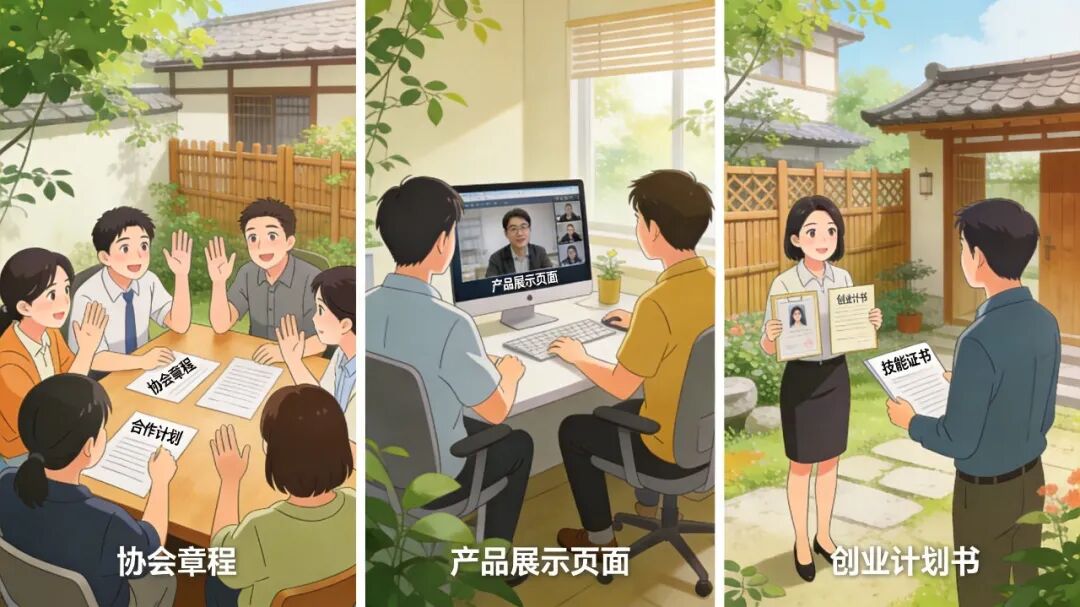
First, don't go it alone - find an organization. Yanshan County in Yunnan set up a bonsai association that unifies technical guidance, variety introduction and market connections; its 53 members grow over 10,000 pots. Jiulaoying Village in Hua County promotes a "collective empowerment" model - only by banding together can you go further.
Second, don't just plant - find a market. Luanzhuang Town in Danfeng County innovated a "courtyard gastrodia" model using a "company + farmer" arrangement: the company supplies the seed, farmers take care of the crop, with technical follow-up. The town now grows 12,800 mu of gastrodia with an annual output value of 960 million yuan, raising average household income by 12,000 yuan。
Third, don't wait for policy - find partners. "We bet on the right trend," says Zhang Yingjie, manager of Chongzhou's "Long River Sunset Garden". But a trend is not waited for - it is found. Chongzhou is recruiting managers for 100 quality courtyards, and the opportunity list has been published.
A final word of honesty:
The 2026 No. 1 document wrote "small and beautiful" cultural tourism into its text, and the courtyard economy is becoming a new growth area for rural revitalization. With 36 courtyards and 1.45 million visitors, Chongzhou has proved that the tiny plot in front of and behind the house really can make a big story. The key is - whether you are willing to take the first step.