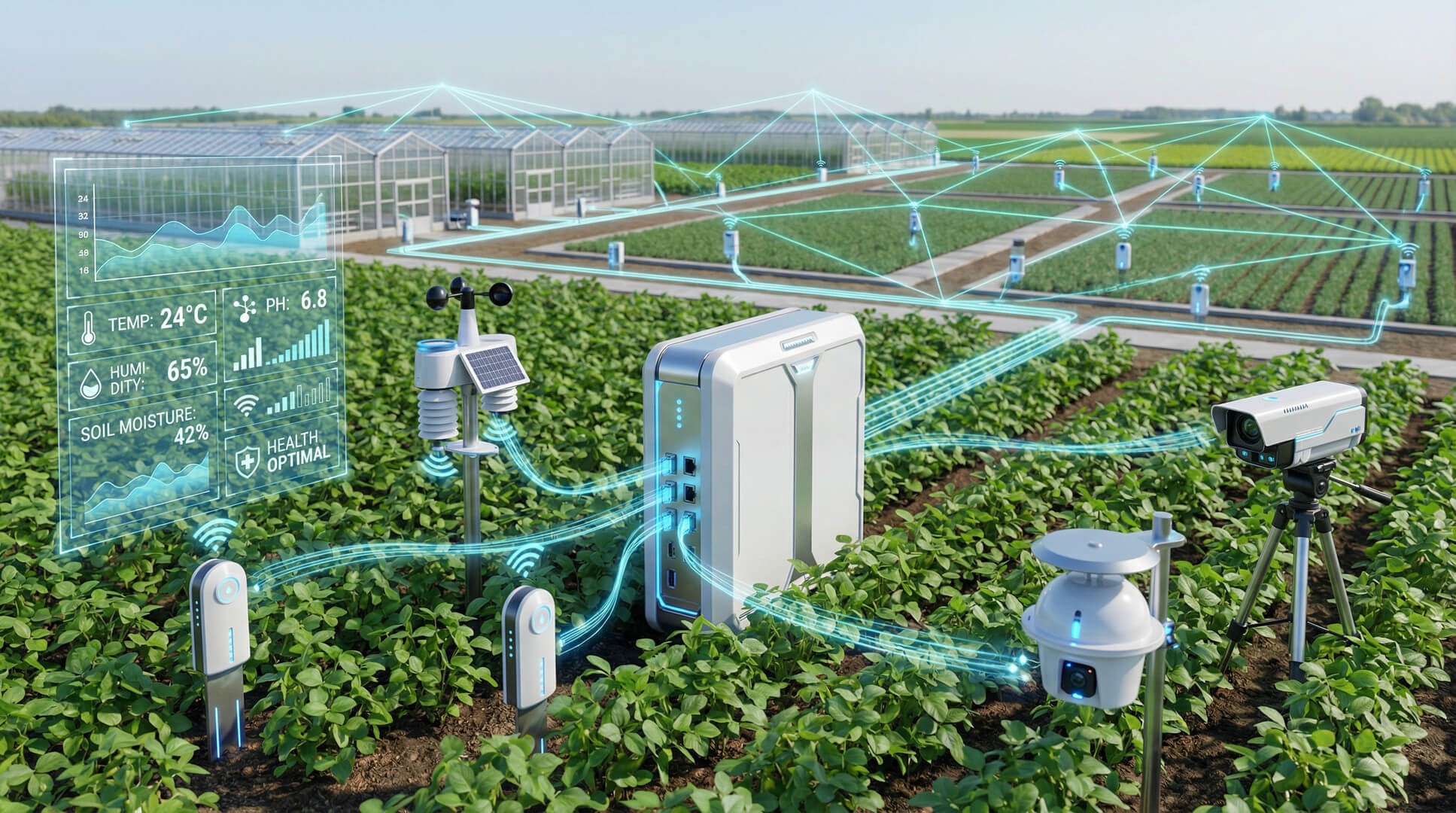
Through AIoT sensor networks and edge gateways, Smart All-Round Monitoring captures and analyzes in real time the water level, flow, soil moisture and key water-fertilizer indicators. It supports zone comparison and anomaly alerts, helping farms move irrigation and fertilization from "gut feeling" to "data-driven", achieving more stable water and fertilizer management with traceable records.
The "water and fertilizer data foundation" for farms and parks. Centered on the key variables of irrigation and fertilization, it provides stable data capture, edge pre-processing, real-time dashboards and anomaly alerts, delivering trustworthy data support for water-fertilizer strategy optimization, closed-loop operations and long-term business analysis.
Water level / depth: monitoring at key points such as channels, reservoirs and field ditches
Flow / water usage: statistics for irrigation main lines and zones
Soil moisture: water content and trend at different depths and zones
Water and fertilizer related: valve / pump station status, irrigation duration and frequency records (optional integration)
Local caching and resumable transmission: data continuity even when the network fluctuates
Anomaly filtering: fewer false alarms and less noise, higher usability
Device health: online rate, signal strength, battery / power consumption and fault alerts
Zone comparison: compare by plot / greenhouse / district to spot deviations quickly
Trend insight: daily / weekly / monthly water use and moisture curves to identify abnormal fluctuation
Key-node replay: correlate with irrigation actions and weather changes (optional)
Low water level / sudden drop: prevent water outage and pump dry-running
Abnormal water use: sudden spikes or drops indicate leakage, blockage or valve faults
Moisture too low / too high: early warning of drought or waterlogging before growth is affected
Water and fertilizer process logs: easy to review and explain externally
Report export: for project acceptance, comparative analysis and business reporting
Point planning (channels / pump stations / main lines / representative plots)
Device deployment and calibration (by zone and layer)
Dashboard configuration (thresholds, alert rules, comparison dimensions)
Operation monitoring and anomaly handling
Periodic review (water use structure, zone deviation, optimization potential)
Open-field irrigation districts, facility agriculture irrigation systems, centralized park water supply, water-fertilizer integration retrofits, and large-scale farms that need refined water management.
Point planning → device deployment → gateway connection → dashboard and alert configuration → trial run validation → O&M support.